
Spotlight on MGO: Why Methylglyoxal Makes Mānuka Honey Special
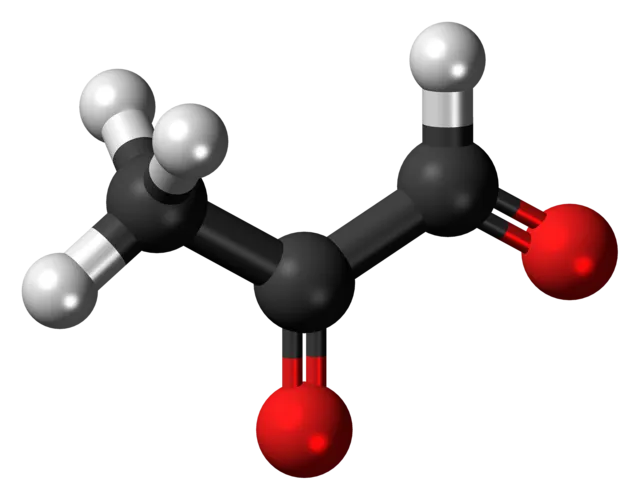
Almost everything unusual about Mānuka honey — the grading, the price, the testing regime, the counterfeiting — traces back to a single organic compound with an awkward name. Methylglyoxal, or MGO, is the reason this honey is sold by number when no other honey is.
Here is the chemistry, in plain terms.
What methylglyoxal is
Methylglyoxal is a small, highly reactive organic compound with the formula CH₃COCHO. It occurs widely in nature and in food chemistry — it is a normal by-product of sugar metabolism and turns up in trace amounts in all sorts of things, from coffee to bread.
What is unusual about Mānuka is not that it contains MGO. It is how much. Ordinary honeys carry a few milligrams per kilogram at most. Mānuka can carry several hundred, and occasionally more than a thousand.
Where it comes from: the DHA precursor
Bees do not produce methylglyoxal. It arrives by conversion.
Mānuka flowers produce nectar unusually rich in dihydroxyacetone (DHA), a related compound. Once the bees have made the honey, DHA slowly converts into methylglyoxal as the honey sits and matures. The conversion happens in the jar, over months, driven by the honey’s own chemistry.
Two consequences follow. First, a fresh Mānuka harvest tests lower than the same honey will months later — MGO builds as DHA is consumed. Second, and importantly, the ceiling is set at the flower. If the nectar was not rich in DHA to begin with, no amount of maturation produces a high MGO number. That is why grade varies so much between sites and seasons, and why it cannot be manufactured.
How it is measured
MGO is quantified by laboratory analysis and reported in milligrams per kilogram. The testing is done by accredited independent laboratories — ours by Hill Laboratories in New Zealand — on a sample drawn from each individual batch.
When a label says MGO 700+, it means that batch’s test confirmed at least 700mg of methylglyoxal per kilogram. It is a concentration measured in a laboratory, not a descriptor chosen by a marketing team.
The discovery
Researchers at the University of Waikato, led by Peter Molan, established in the 1980s that Mānuka honey displayed a distinctive, measurable characteristic that other honeys did not. It was quantifiable enough to become the basis of the original UMF grading system — but nobody could say precisely which compound was responsible.
The answer came in 2008, when work by Professor Thomas Henle at the Technical University of Dresden, alongside New Zealand research, identified it as methylglyoxal. That identification is what made direct MGO grading possible, and it is why the number on modern jars exists at all.
Why the number is worth checking
Because MGO is a specific compound with a specific measurement, it is one of the few things on a food label that is genuinely falsifiable. Either the laboratory found 700mg per kilogram in that batch, or it did not.
That is also why traceability matters more than the number itself. Ours is labelled MGO 700+ — the tier the batch clears. Every jar carries a batch code linking to that harvest, its origin region and its laboratory result, so the figure on the front is something you can confirm rather than accept.