
How to Read the Batch Code on Your Jar
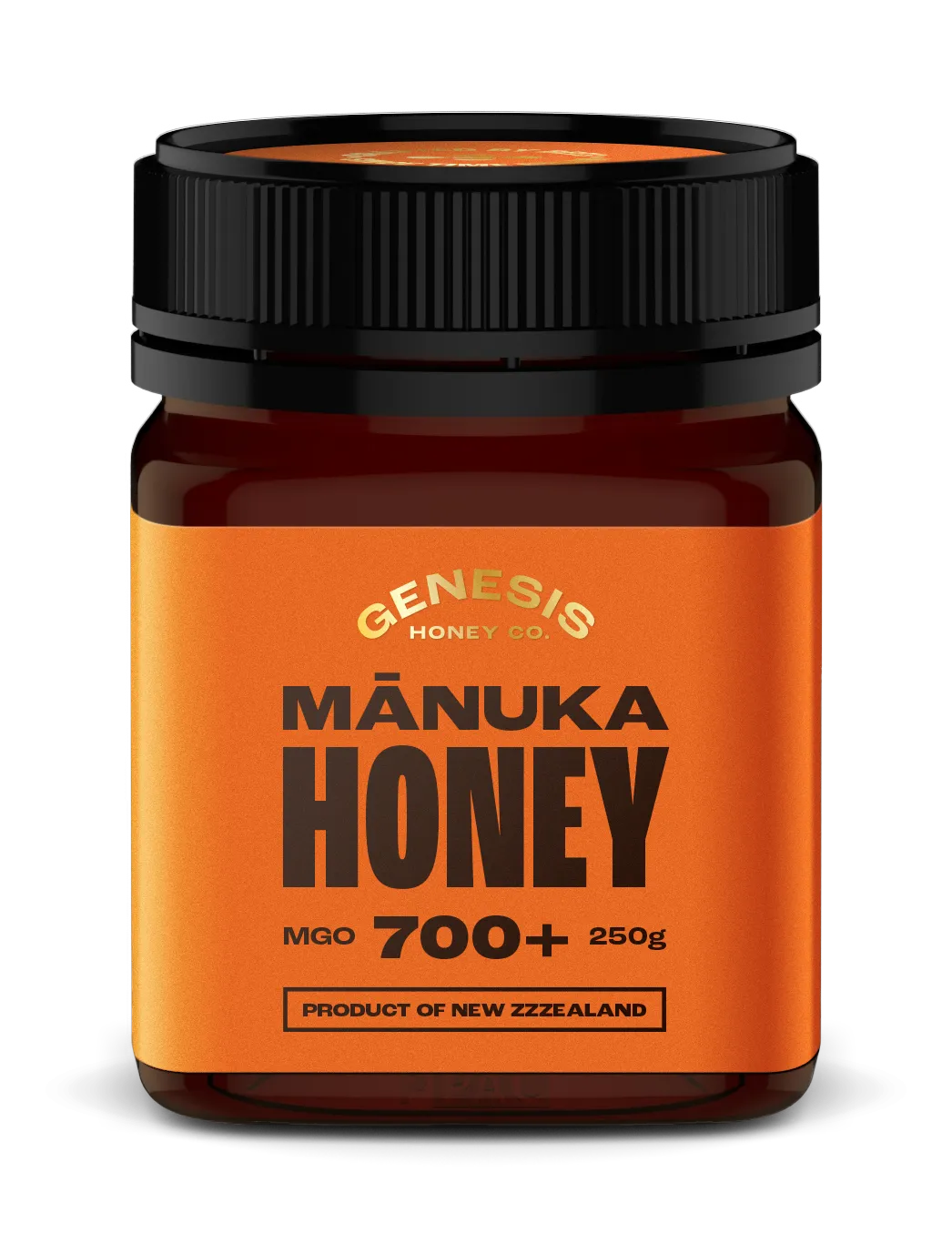
Most food labels ask you to take their word for it. A batch code does the opposite: it is a pointer to a record that either exists or does not.
Ours look like this:
ghc-2504-jm-d7b2-816
Five parts, each doing a job.
ghc — the producer
Genesis Honey Co. Fixed on every jar. It exists so a code found out of context still says who packed it.
2504 — the harvest window
Year and month the honey was extracted, so 2504 is April 2025. Mānuka flowers for roughly four to six weeks, which is why the month matters: it places the jar inside one specific flowering, not a blended average of several.
jm — the origin
A two-letter code for the harvest site. One region, one season. If a producer cannot tell you this, the honey has almost certainly been combined from multiple sites.
d7b2 — the lot
The specific extraction lot. This is what the laboratory sample was drawn from, and it is the part that ties the number on the front of the jar to a real test.
816 — the batch check
A short checksum. It catches a mistyped code rather than silently returning the wrong record.
Looking it up
Type the whole code into the trace page on this site. You get the harvest window, the origin region, the packing date and the laboratory record for that lot.
Ours is labelled MGO 700+. We label the tier a batch clears, never round up to a peak figure.
Why this is unusual
Very few food products let you look up the individual unit in your hand. Grading systems tell you what a producer claims; a batch record tells you what a laboratory found. They are not the same thing, and only one of them is checkable by you.
If a jar carries a number but no way to trace it, the number is an assertion. If it carries a code that resolves, it is a record.