
Why 700+ MGO Is the Rarest Grade of Mānuka Honey
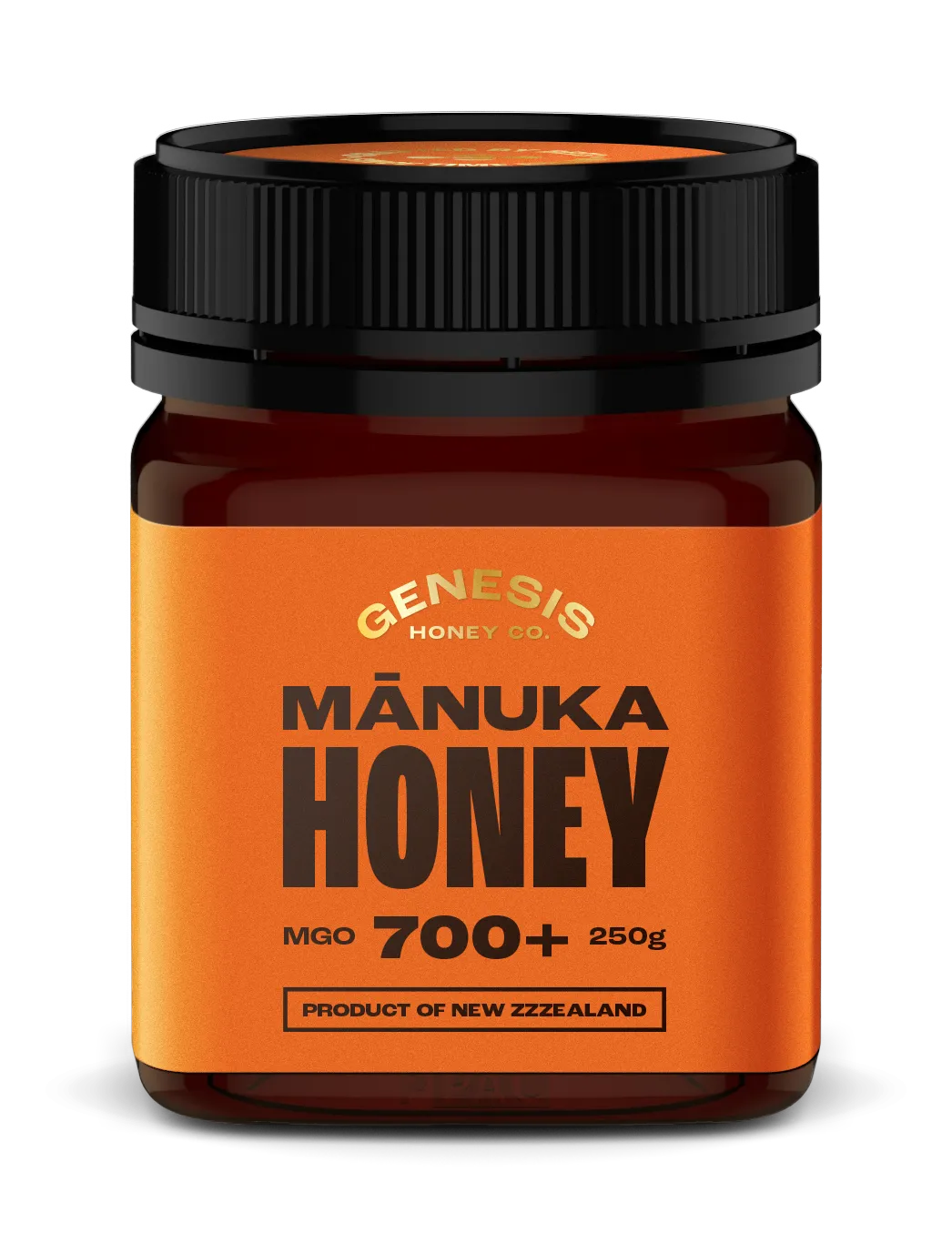
Walk along a shelf of Mānuka honey and the numbers climb steeply: 83, 263, 514, 700, 829. So does the price — often far faster than the number. It is reasonable to ask what you are actually buying at the top of that scale, and whether the jump is justified.
Here is what separates the grades.
The scale, plainly
MGO grades state methylglyoxal concentration in milligrams per kilogram, confirmed by laboratory testing:
- MGO 83+ — entry grade. Genuine mānuka, everyday table honey.
- MGO 263+ — mid grade.
- MGO 514+ — high grade.
- MGO 700+ — premium tier. Where supply thins sharply.
- MGO 829+ — the rarest harvests of all.
Approximate UMF equivalents run 5+, 10+, 15+, 18+ and 20+ respectively. UMF is a separate licensing system measuring MGO alongside other authenticity markers such as leptosperin and DHA — related to MGO, but not directly interchangeable with it.
The scale is not linear, and neither is supply
This is the part most buyers miss. Moving from MGO 83 to MGO 263 is a large step in number but a relatively modest one in scarcity — plenty of harvests land in that range. Getting from 514 to 700 is a different proposition entirely.
Methylglyoxal levels depend on the concentration of dihydroxyacetone in the nectar, which varies enormously between mānuka stands, regions and seasons. A great many perfectly genuine mānuka harvests never test above the low hundreds no matter how well they are handled. You cannot add MGO, and you cannot cultivate your way to it reliably.
The result: each step up the scale represents a smaller and smaller share of the total harvest. By MGO 700+ you are in a narrow band at the top.
Why blending muddies the picture
There is a straightforward way to hit a target number: blend. Combine a high-testing batch with a lower one until the average lands where you want it, and the label is accurate.
It is legal and common. It also means the number describes a recipe rather than a harvest. Single-origin honey — one region, one season, no blending — has to reach the grade on its own, which is a considerably harder standard to meet consistently.
Rounding tells you something
Look at how a producer’s tested figure relates to its label. Ours is labelled MGO 700+ — the tier the batch clears, not a peak figure.
The alternative approach is to label as close to the tested figure as possible. Both are legal; only one leaves headroom. If a label number and a test result match exactly, it is worth asking which was decided first.
What you can verify
Grading only means something if it is independent. Our batches are tested by Hill Laboratories in New Zealand, and every jar carries a batch code and trace URL linking to that batch’s harvest window, origin region, packing date and laboratory result.
Whether the premium is worth it is your call. But at the top of the scale you should at least be able to see the evidence — not just the number.