
Beyond Mānuka: How It Compares to Other Premium Pantry Staples
Mānuka honey belongs to a small club of foods that cost many times more than their ordinary equivalents and are sold with numbers, certifications and origin claims attached. Saffron, extra virgin olive oil, vanilla, truffles, single-origin coffee — all face the same three questions Mānuka does.
Why is it scarce? How is it graded? And how do you know it is real?
Saffron: scarcity by labour
Saffron is the world’s most expensive spice by weight because each crocus flower yields three stigmas, all picked by hand, and it takes roughly 150,000 flowers to make a kilogram. The bottleneck is human labour in a short autumn window.
Grading is by ISO standard, measuring colour, flavour and aroma compounds in a laboratory — conceptually very close to MGO testing. Adulteration is rampant: dyed safflower, marigold petals, even shredded corn silk.
Mānuka’s scarcity is structurally similar but climatic rather than manual: a four-to-six week flowering window, remote hill country, and a harvest that fails if the weather turns.
Extra virgin olive oil: the definition is the product
“Extra virgin” is not a marketing term — it is a chemical specification covering free acidity, peroxide value and sensory defects, verified by laboratory and taste panel. Oil that fails is not extra virgin, regardless of what the bottle says.
Olive oil fraud is among the best-documented in food, which is why the good producers emphasise harvest date, single estate and region. The parallel with Mānuka is direct: a defined standard, laboratory verification, and provenance as the defence against counterfeiting.
Vanilla: the price of a slow crop
Vanilla orchids must be hand-pollinated within a few hours of flowering, and the pods then need months of curing. Supply is concentrated in a few regions and vulnerable to cyclones — a single storm can move the world price.
Most “vanilla” flavour sold globally is synthetic vanillin. Real vanilla competes against a cheap chemical substitute, much as genuine mānuka competes against blended and mislabelled honey.
Truffles: provenance you cannot fake — but people try
Truffles cannot be farmed reliably, are found by trained dogs in specific regions, and lose value within days of harvest. Substitution — cheaper species passed off as expensive ones, or oils flavoured with synthetic compounds — is the standard fraud.
The defence, again, is traceability: which forest, which day, which supplier.
Single-origin coffee and chocolate: the blending question
Both categories are built around exactly the distinction Mānuka producers argue about. Blended product delivers consistency by averaging across farms and seasons. Single-origin delivers character and variation from one place and one harvest, and costs more because it cannot be smoothed out.
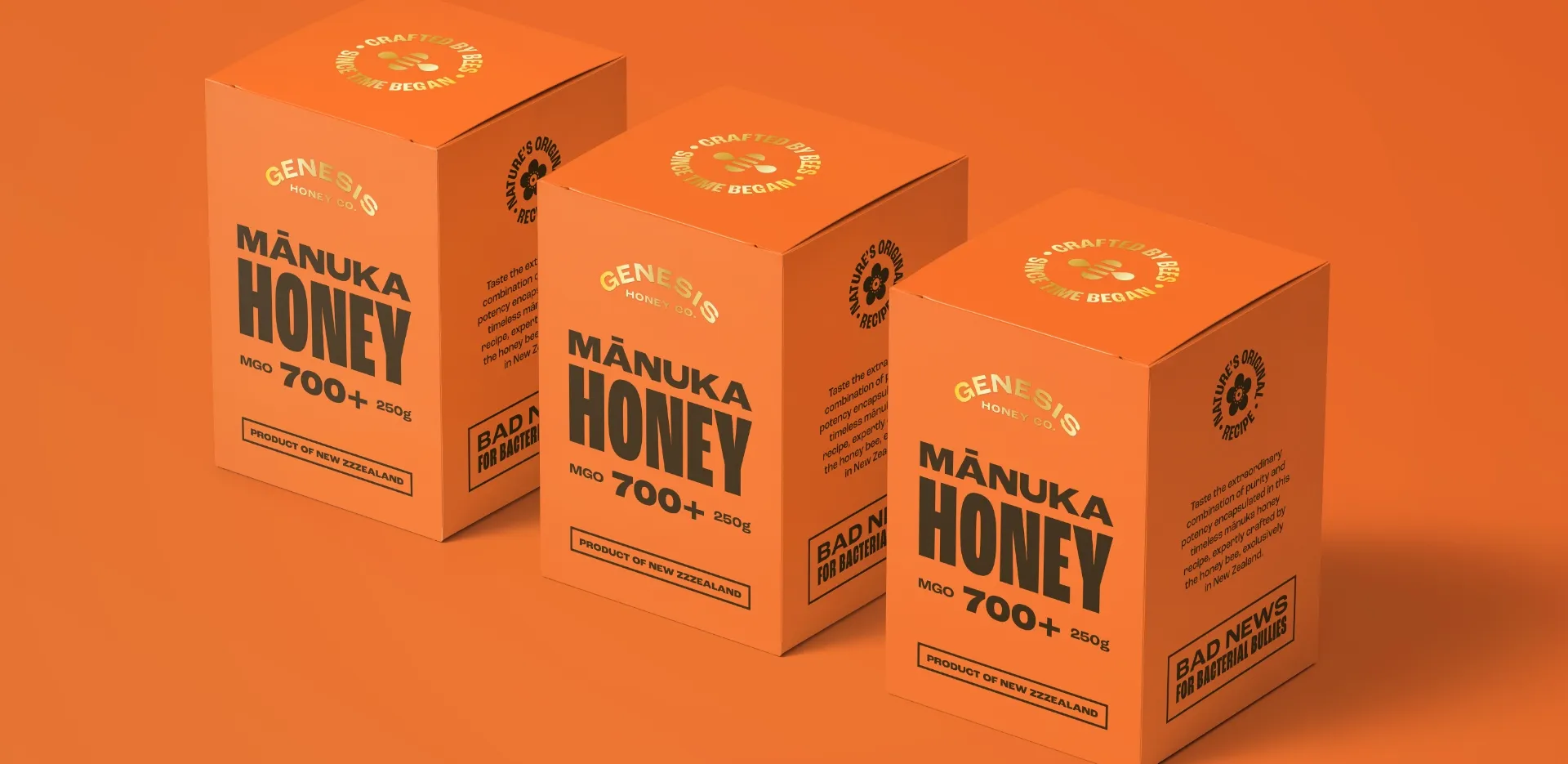
Genesis Honey Co is single-origin: one region, one season, no blending. The grade has to be reached on its own rather than averaged into place.
What the club has in common
Every one of these products is scarce for a structural reason, graded against a defined standard, and heavily counterfeited — in that order. The counterfeiting follows the price, and the grading exists because of the counterfeiting.
That is why the useful question with any of them is not “what does the label claim?” but “what can I check?”
Where Mānuka is unusual
Mānuka has something most of these do not: batch-level public traceability. New Zealand’s Ministry for Primary Industries defines mānuka honey scientifically — four chemical markers plus a DNA test — and every export batch must pass.
On top of that, each of our jars carries a code that resolves to its own harvest window, origin region, packing date and laboratory result. Very few premium foods let you look up the specific unit in your hand. Ours is graded MGO 700+ on its own laboratory result from Hill Laboratories.