
Mānuka Honey Through History: From Traditional Use to Modern Grading
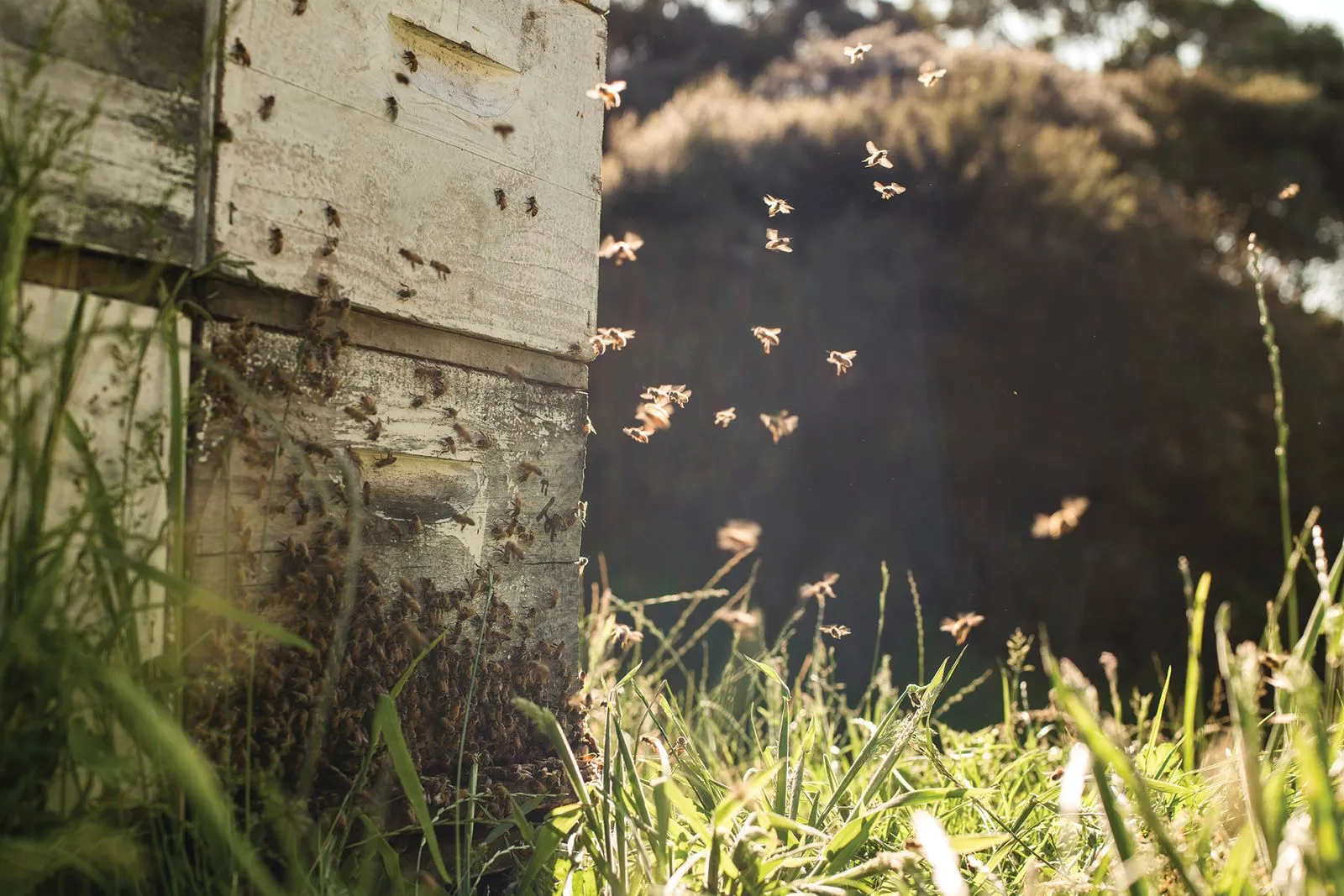
Mānuka honey has only been graded by laboratory number for a couple of decades. The tree itself has been part of life in Aotearoa New Zealand for very much longer. The story of how one became the other — from a scrubby native tree to a jar with a measured figure on the label — explains a lot about why this honey is sold the way it is.
The tree before the honey
Leptospermum scoparium — mānuka — grows across New Zealand, often as the first tree to colonise cleared or disturbed land. For Māori it was a genuinely useful plant: the dense, hard timber made tools, weapons and paddles, and the wood was valued for cooking fires. The tree was known and worked with long before anyone was interested in what bees did with its flowers.
European settlers, arriving with a farming eye, largely dismissed it as scrub to be cleared. The name “tea tree” comes from that era.
Honey bees arrive
Honey bees are not native to New Zealand — they were introduced in the 1830s. For well over a century afterwards, mānuka honey was regarded as a poor cousin: dark, strongly flavoured, prone to setting hard in the comb and awkward to extract. It was often fed back to the hives or sold cheaply. Beekeepers chased clover.
The 1980s: something measurable
The shift began when researchers at the University of Waikato, led by biochemist Peter Molan, examined mānuka honey and found it displayed an unusual chemical activity that persisted under conditions where ordinary honey’s did not. It was distinctive enough to warrant a name — non-peroxide activity — and distinctive enough to be measured.
For the first time, mānuka honey had something quantifiable setting it apart. That measurement became the basis of the UMF grading system.
2008: naming the compound
The obvious question — what exactly is doing that? — went unanswered for two decades. In 2008, work by Professor Thomas Henle at the Technical University of Dresden, alongside New Zealand research, identified the compound as methylglyoxal, or MGO.
That identification changed the industry. Instead of grading honey by an activity measurement, laboratories could now quantify a specific compound in milligrams per kilogram. MGO grading — the number on our label — dates from this.
Where MGO comes from
Mānuka nectar is unusually rich in dihydroxyacetone (DHA), which converts slowly into methylglyoxal as the honey matures in the jar. High-grade honey is partly a function of the right stand of trees and partly a function of time.
The regulatory era
As prices rose, so did adulteration and mislabelling. New Zealand’s Ministry for Primary Industries introduced a scientific definition for mānuka honey — a combination of chemical markers plus a DNA test for mānuka pollen — that all exported honey must meet. Exporters are certified and packing runs under registered Risk Management Programmes.
Genesis Honey Co is MPI export certified, Exporter ID AEX000242, and packs under an RMP-registered process in Mount Maunganui.
Which brings us to the jar
Two hundred years ago this honey was fed back to the bees. Today each batch goes to an independent laboratory — ours to Hill Laboratories — and comes back with a number. Ours is graded MGO 700+, with a batch code on the jar that traces to that harvest and its laboratory result.