
Australian vs New Zealand Mānuka Honey: What Is Actually Different
Short answer: Both Australia and New Zealand produce honey sold as mānuka, from Leptospermum plants. The main difference is regulation: New Zealand has a government test, with chemical markers and pollen DNA, that all honey exported as mānuka must pass. To buy honey that has passed it, look for Product of New Zealand, packing in New Zealand and an MPI exporter.
This is a contested subject, so the facts are worth setting out plainly.
The plants
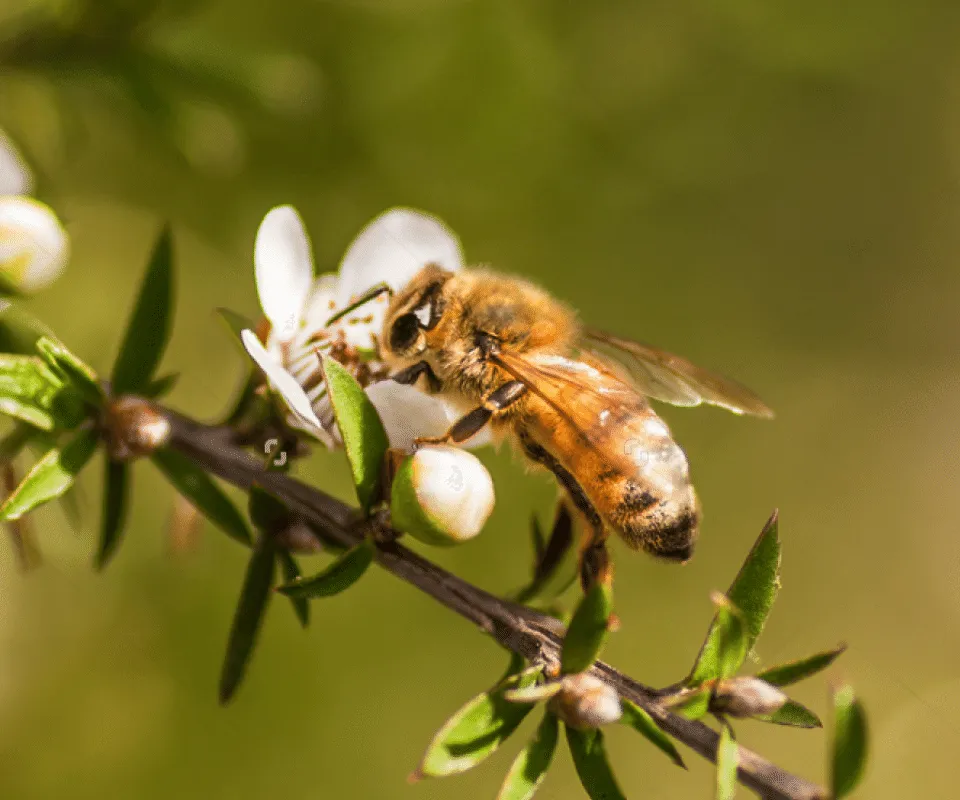
In New Zealand, mānuka honey comes from one native species, Leptospermum scoparium. Australia is home to many Leptospermum species; the Australian Manuka Honey Association puts the number above 80. Several produce honey with high methylglyoxal levels, and Australian producers sell it as mānuka.
The name
New Zealand producers have tried to reserve “mānuka” for New Zealand honey. In December 2021, the UK Intellectual Property Office refused an application to register “manuka honey” as a certification mark for New Zealand producers, finding that UK buyers do not understand the term to mean New Zealand only. So “mānuka” on a label does not, by itself, tell you the country.
The regulation
Here the two systems differ. New Zealand’s Ministry for Primary Industries sets a scientific definition that all honey exported from New Zealand as mānuka must meet: four chemicals from mānuka nectar plus DNA from mānuka pollen, tested by MPI-recognised laboratories, with exporters registered and audited. Read our explainer on the MPI definition.
Australian mānuka is graded by MGO in the same way, and producers there have their own industry standards. It is not tested against New Zealand’s MPI definition, which applies to New Zealand exports.
What to check, whichever you buy
- A specific grade with its system, such as MGO 700+
- The country of origin and of packing, both on the label
- A named, accredited testing laboratory
- A batch code you can trace to a result
Where we stand
Genesis Honey Co sells New Zealand mānuka: harvested in New Zealand’s Bay of Plenty, packed in New Zealand, and exported under MPI certification (exporter ID AEX000242). Each batch is graded MGO 700+ by Hill Laboratories, and the code on your jar traces to its record.
Questions
Is Australian mānuka honey real?
Australian Leptospermum honey can carry high MGO levels and is legally sold as mānuka in Australia. It is not tested under New Zealand's MPI definition, which applies to New Zealand exports.
Is New Zealand mānuka honey better than Australian?
Grade for grade, compare the MGO number and the testing behind it. What New Zealand honey offers is a government authenticity test that every export batch must pass.
Who can call honey mānuka?
There is no single global rule. In 2021 the UK Intellectual Property Office refused an application to reserve the term for New Zealand honey.